





How to evaluate efficiency and heat management in vehicle inverters?
- Comprehensive Guide to Evaluating Vehicle Power Inverters: Efficiency and Heat Management
- 1. What is the role of a vehicle power inverter?
- 2. How does inverter efficiency impact vehicle performance?
- 3. What are the common cooling methods for vehicle inverters?
- 4. How do electrical losses affect inverter temperature?
- 5. What are the benefits of advanced thermal management in inverters?
- 6. How can I assess the thermal performance of an inverter?
- 7. What are the implications of poor heat management in inverters?
- 8. How does inverter efficiency influence overall vehicle energy consumption?
- Conclusion: Why Choose Congsin for Your Vehicle Power Inverter Needs
Comprehensive Guide to Evaluating Vehicle Power Inverters: Efficiency and Heat Management
When considering the purchase of a vehicle power inverter, it's crucial to understand how to evaluate its efficiency and heat management capabilities. Below are key questions and answers to guide your decision-making process.
1. What is the role of a vehicle power inverter?
A vehicle power inverter converts direct current (DC) from the vehicle's battery into alternating current (AC), enabling the operation of AC-powered devices within the vehicle. This process is essential for powering various electronic devices and systems.
2. How does inverter efficiency impact vehicle performance?
Inverter efficiency determines how effectively the device converts DC to AC. Higher efficiency means less energy is lost as heat, leading to better overall performance and reduced strain on the vehicle's electrical system. For instance, advanced thermal management designs have been shown to enhance the performance of silicon carbide inverters in heavy-duty vehicles .
3. What are the common cooling methods for vehicle inverters?
Vehicle inverters typically employ air or liquid cooling systems to manage heat. Air cooling is simpler and cost-effective but may be less efficient. Liquid cooling, often using water-based coolants, offers superior heat dissipation and is more prevalent in automotive applications .
4. How do electrical losses affect inverter temperature?
Electrical losses within the inverter generate heat, increasing its operating temperature. Effective thermal management is essential to prevent overheating, which can degrade performance and reliability. Manufacturers often design inverters to handle temperature rises, typically not exceeding 20°C above ambient temperatures .
5. What are the benefits of advanced thermal management in inverters?
Advanced thermal management strategies, such as integrating heat sinks, liquid cooling systems, and optimized airflow designs, can significantly improve inverter reliability and performance. These methods help maintain optimal operating temperatures, enhancing the longevity and efficiency of the inverter .
6. How can I assess the thermal performance of an inverter?
Evaluating an inverter's thermal performance involves examining its cooling system design, materials used, and temperature control mechanisms. Reviewing manufacturer specifications and performance tests can provide insights into how well the inverter manages heat under various operating conditions.
7. What are the implications of poor heat management in inverters?
Inadequate heat management can lead to overheating, reduced efficiency, and potential failure of the inverter. Over time, excessive heat can damage internal components, leading to costly repairs or replacements and decreased vehicle performance.
8. How does inverter efficiency influence overall vehicle energy consumption?
Higher inverter efficiency reduces energy losses, leading to better fuel economy in internal combustion engine vehicles and extended driving range in electric vehicles. Efficient inverters ensure that more of the vehicle's energy is used for propulsion and less is wasted as heat.
Conclusion: Why Choose Congsin for Your Vehicle Power Inverter Needs
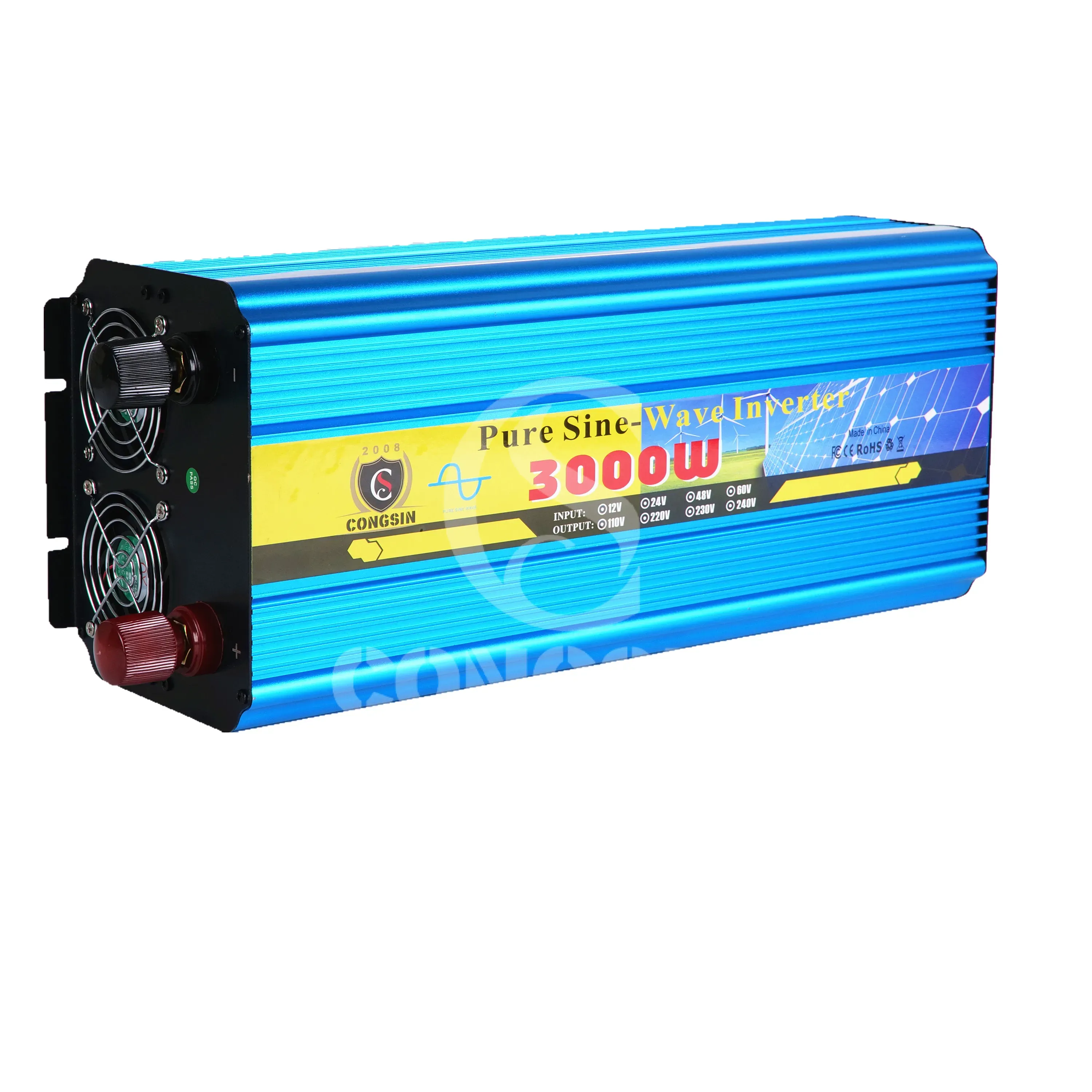
Congsin offers state-of-the-art vehicle power inverters designed with advanced thermal management systems to ensure optimal efficiency and reliability. Our inverters are engineered to meet the highest industry standards, providing superior performance and longevity for your vehicle's electrical systems.
References:
Advanced Thermal Management Design Boosts Performance of Silicon Carbide Inverters for Heavy-Duty Vehicles. National Renewable Energy Laboratory. September 28, 2021.
A Thorough Review of Cooling Concepts and Thermal Management Techniques for Automotive WBG Inverters: Topology, Technology and Integration Level. MDPI.
Understanding Temperature Control in Commercial Vehicle Inverters. CarWorship. August 2025.
Novel Thermal Management Strategy for Improved Inverter Reliability in Electric Vehicles. MDPI.
Thermal Performance of Motor and Inverter in an Integrated Starter Generator System for a Hybrid Electric Vehicle. MDPI.
Review of Thermal Management System for Battery Electric Vehicle. ScienceDirect.
Performance Evaluation and Energy Management of an Automobile Exhaust Thermoelectric Generator for ISG Mild HEV Application. ScienceDirect.
Energy Consumption Analysis and Performance Evaluation of Electric Vehicle Integrated Thermal Management System Experiments. ScienceDirect.
Performance Evaluation of an Electric Vehicle Thermal Management System with Waste Heat Recovery. ScienceDirect.
How To Troubleshoot A Car Power Inverter? - Talking Tech Trends. YouTube.


Modified Sine Wave Inverters
How does the UPS function of this inverter work?
When the external power supply is normal, the inverter powers the device while charging the battery; when the external power supply is interrupted, it automatically switches to battery power to ensure uninterrupted operation of the device.
Can this 2000W inverter power an air conditioner?
If the air conditioner power is within 2000W and the input is AC220V, it can supply power normally. It is recommended to ensure stable power when starting.
Which country’s voltage standards does it support?
It defaults to AC 220V output, suitable for regions with 220V voltage standards such as China and Europe; it can also be customized to output AC 110V, suitable for regions with 110V voltage standards such as the United States and Japan.
What power appliance can this inverter run?
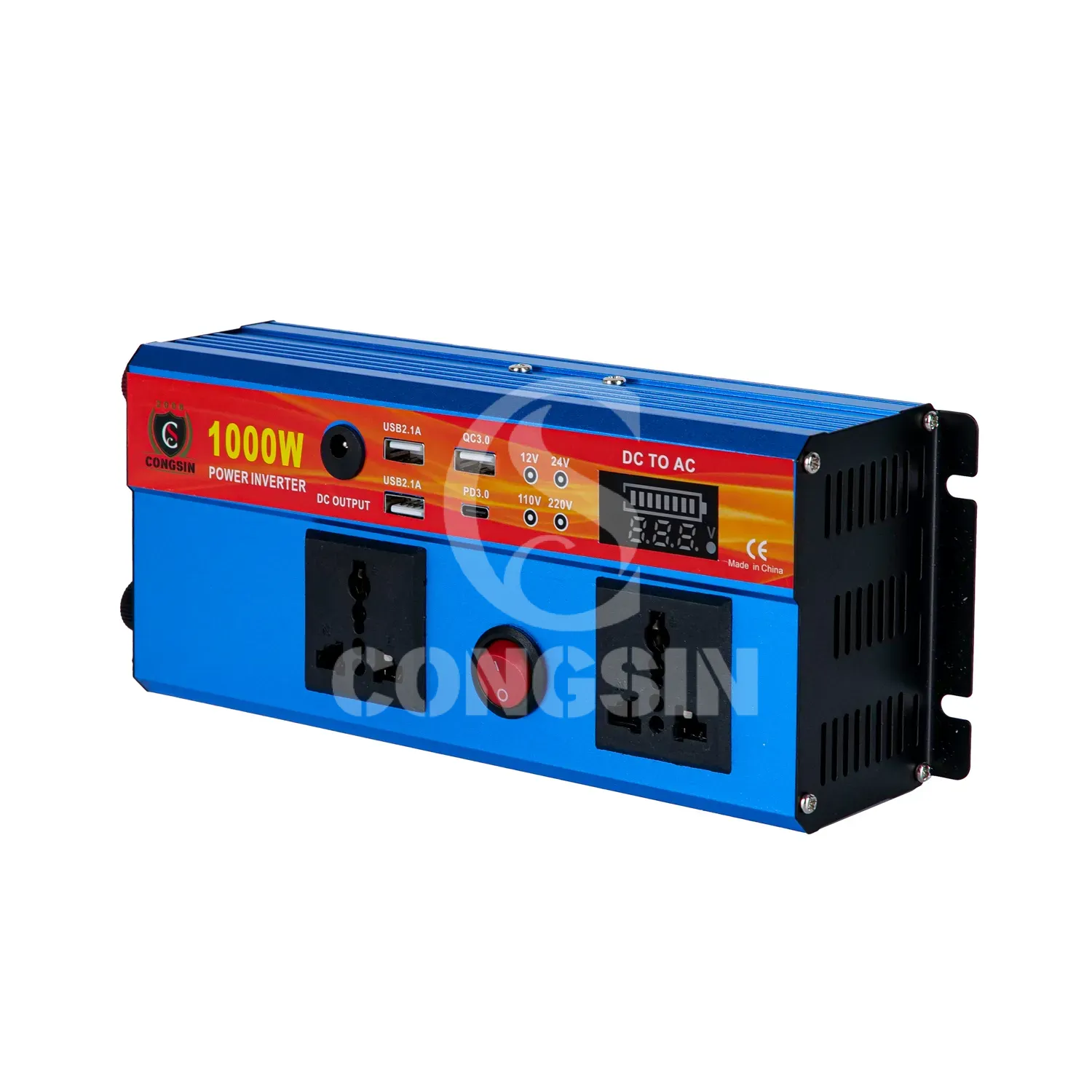
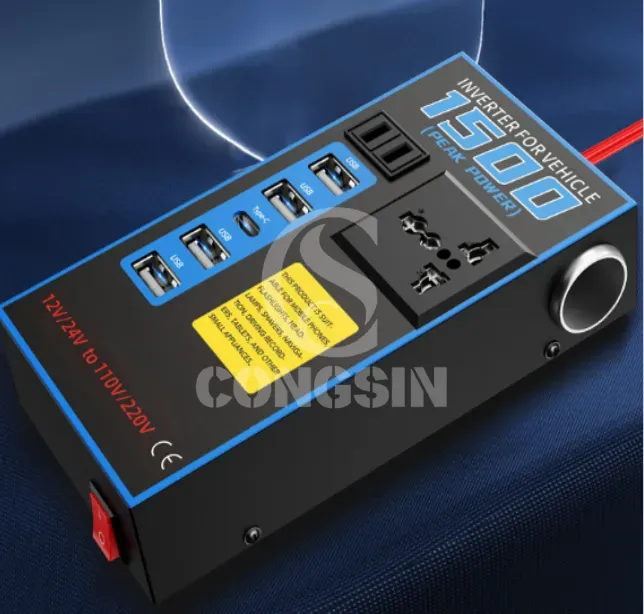
It has a continuous power of 800W, so it can run appliances within 800W; the peak power is 1500W, supporting the instantaneous startup of appliances within 1500W.
Is it compatible with both 12V and 24V vehicles?
Yes, it supports DC12V/24V dual input.
Get in Touch with Our Team
You can also communicate with us directly through our online contact form. Please fill in the following information, and our team will contact you as soon as possible after receiving your message.

CONGSIN is a trusted OEM factory for power inverters, solar charge controllers, and DC converters. Reliable solutions for global B2B buyers.
 High Quality
 7/24 Service
 Guaranteed Warranty
© 2025 Congsin. All Rights Reserved.